United States
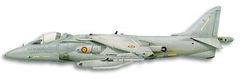
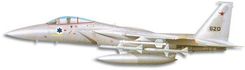
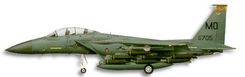
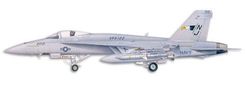
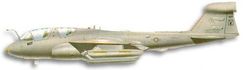
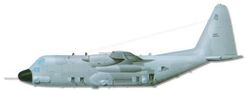
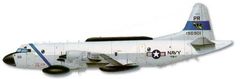
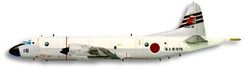
60 military aircraft across 6 categories
Aviation History
The United States Air Force (USAF) is the aerial warfare service branch of the United States Armed Forces. It is one of the eight uniformed services of the United States and is the world's largest, most technologically advanced, and most capable air force. The USAF is responsible for aerial warfare, air defense, and the development and employment of military space assets, as well as being a key component of the U.S. nuclear deterrence triad.
Headquartered at the Pentagon in Arlington, Virginia, the Air Force is led by the Secretary of the Air Force — a civilian — and the Chief of Staff of the Air Force (CSAF), a four-star general who serves as the senior uniformed officer of the service.
Mission
The official mission of the United States Air Force is:
"To fly, fight, and win — airpower anytime, anywhere."
This encompasses air superiority, global strike, rapid global mobility, intelligence, surveillance and reconnaissance (ISR), command and control, and cyberspace operations. Since 2019, space operations have been administratively separated into the United States Space Force, though the Air Force retains close organizational and operational ties to it.
Origins and Early History
Army Air Corps and the Road to Independence
American military aviation traces its formal origins to August 1, 1907, when the U.S. Army Signal Corps established an Aeronautical Division. This small unit was tasked with studying the military potential of balloons, airships, and heavier-than-air flying machines — less than four years after the Wright Brothers' first powered flight at Kitty Hawk.
During World War I, the United States entered the conflict with a negligible air arm. American pilots frequently flew in French and British aircraft, and the experience exposed the significant gap between U.S. aviation capability and that of the European powers. The war accelerated investment and organizational development, but American airpower remained subordinate to Army ground commanders.
The interwar period saw visionary officers — most notably Brigadier General Billy Mitchell — argue strenuously for an independent air force and for the strategic potential of airpower. Mitchell's court-martial in 1925, following public criticism of the Army and Navy's aviation policies, made him a controversial figure but also a martyr for the cause of air independence. His ideas would prove prescient.
In 1926, the Army Air Corps was formally established, followed in 1941 by the Army Air Forces (AAF), which gave airpower advocates significantly greater organizational autonomy within the Army structure.
World War II
The Army Air Forces entered World War II as a massive, rapidly expanding organization that ultimately numbered over 2.4 million personnel and nearly 80,000 aircraft at peak strength. Its contributions shaped the outcome of the war on every front.
In the European Theater, the AAF's Eighth Air Force — the "Mighty Eighth" — flew strategic bombing campaigns deep into Germany, targeting industrial infrastructure, oil production, and transportation networks. The daylight precision bombing doctrine, championed by American planners and contrasted with the RAF's nighttime area bombing, proved costly in aircrew losses before the introduction of long-range escort fighters (particularly the P-51 Mustang) turned the tide against the Luftwaffe in 1944.
In the Pacific Theater, the AAF conducted the island-hopping campaign's air component, ultimately deploying the B-29 Superfortress for strategic bombing of the Japanese home islands. The B-29s of the 509th Composite Group dropped the atomic bombs on Hiroshima (August 6, 1945) and Nagasaki (August 9, 1945), missions that remain the only combat use of nuclear weapons in history.
Establishment as an Independent Service
The National Security Act of 1947, signed by President Harry S. Truman on July 26, 1947, formally established the United States Air Force as an independent branch of the armed forces, separate from the Army. September 18, 1947 is recognized as the official birthday of the USAF, the date on which W. Stuart Symington was sworn in as the first Secretary of the Air Force and General Carl A. Spaatz became the first Chief of Staff.
The new service inherited the personnel, aircraft, and institutional culture of the Army Air Forces, along with a firmly held conviction — shaped by World War II experience — that strategic airpower was the decisive instrument of modern warfare.
The Cold War Era
Strategic Air Command and Nuclear Deterrence
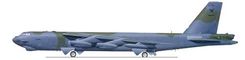
The defining mission of the early USAF was nuclear deterrence. Strategic Air Command (SAC), under the aggressive and demanding leadership of General Curtis LeMay from 1948 to 1957, became the most powerful military organization in American history. SAC operated the bomber leg of the nuclear triad — initially B-29s and B-36 Peacemakers, then the all-jet B-47 Stratojet and B-52 Stratofortress — maintained on 24-hour alert, ready to strike the Soviet Union on short notice.
The development of intercontinental ballistic missiles (ICBMs) in the late 1950s added a second SAC mission: the management of land-based nuclear missiles, including the Atlas, Titan, Minuteman, and later Peacekeeper systems.
Korea (1950–1953)
The Korean War tested the newly independent Air Force in both strategic and tactical roles. USAF fighters — primarily the F-86 Sabre — clashed with Soviet-built MiG-15s flown by North Korean, Chinese, and covertly Soviet pilots over "MiG Alley" along the Yalu River, producing the jet age's first large-scale air-to-air combat. The F-86 pilots achieved a favorable kill ratio, though the exact figures have been debated by historians.
The war also revealed persistent tensions between strategic bombing advocates and those who saw tactical air support and interdiction as equally vital missions — a tension that would recur throughout the Cold War and beyond.
Vietnam (1955–1975)
Vietnam represented the most complex and, in many respects, most difficult chapter in Cold War USAF history. Operating under tight political restrictions on target selection and tactics, the Air Force conducted both strategic bombing campaigns (Operation Rolling Thunder, Operation Linebacker I and II) and extensive tactical support operations.
Rolling Thunder (1965–1968) in particular became a case study in the limits of airpower when constrained by political objectives and graduated escalation. Linebacker II (December 1972), by contrast — an intensive, unrestricted 11-day campaign against Hanoi and Haiphong — achieved its immediate coercive objective and brought North Vietnam back to the negotiating table.
The war produced important lessons in air combat, electronic warfare, and the need for realistic combat training — lessons that directly produced the Top Gun naval program and the Air Force's own Red Flag exercises, begun in 1975 at Nellis Air Force Base.
The F-105 Thunderchief bore a disproportionate share of the bombing burden over North Vietnam and suffered severe losses. The war also saw the first large-scale use of precision-guided munitions ("smart bombs"), which proved dramatically more effective than conventional iron bombs against point targets.
Reorganization and the All-Volunteer Force
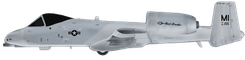
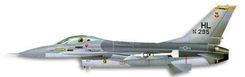
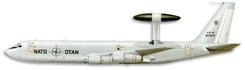
The end of the Vietnam War and the transition to an all-volunteer military in 1973 forced significant restructuring. Force size was reduced, and the Air Force invested heavily in a new generation of aircraft — the F-15 Eagle (air superiority), F-16 Fighting Falcon (multirole), A-10 Thunderbolt II (close air support), and the E-3 Sentry airborne warning and control system (AWACS) — that would define American airpower for decades.
Post-Cold War Operations
Gulf War (1991)
Operation Desert Storm showcased the transformation of American airpower. A 38-day air campaign — the most intensive in history to that point — preceded the ground war and systematically dismantled Iraqi air defenses, command and control, and logistics. The F-117 Nighthawk stealth aircraft struck downtown Baghdad on the opening night of the war, and the combination of stealth, precision-guided munitions, and real-time ISR produced results that stunned both allies and adversaries.
The Gulf War validated decades of investment in stealth technology, precision weapons, and network-centric warfare, and fundamentally altered global expectations of what airpower could achieve.
Balkans (1990s)
Operations in Bosnia and Kosovo reinforced the precision-airpower model. Operation Allied Force (1999) against Serbia was the first conflict in which airpower alone — without a ground invasion — achieved the stated political objective, though the campaign's length (78 days) and the political constraints under which it was conducted remained subjects of debate.
Global War on Terror (2001–present)
Following the September 11 attacks, the USAF has operated continuously in combat. Operations Enduring Freedom (Afghanistan) and Iraqi Freedom (Iraq) demonstrated both the strengths and limitations of airpower in counterinsurgency environments. The demand for persistent ISR, precision strike, and close air support drove rapid expansion of remotely piloted aircraft (RPA) capabilities, with platforms like the MQ-1 Predator and MQ-9 Reaper becoming central to day-to-day operations.
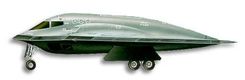
The B-2 Spirit stealth bomber made its combat debut in Kosovo and has since been employed in Iraq, Afghanistan, and Libya, demonstrating the ability to deliver precision munitions globally from the continental United States.
Major Commands
The USAF organizes its forces under several Major Commands (MAJCOMs):
- Air Combat Command (ACC) — Combat-coded aircraft; fighters, bombers, ISR, command and control
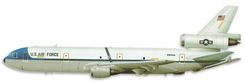
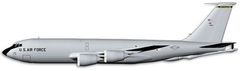
- Air Mobility Command (AMC) — Strategic airlift (C-17, C-5) and aerial refueling (KC-135, KC-46)
- Air Force Global Strike Command (AFGSC) — Nuclear bombers (B-2, B-52, B-21) and ICBMs
- Air Force Materiel Command (AFMC) — Research, development, test, and logistics
- Air Force Special Operations Command (AFSOC) — Special operations aviation
- Pacific Air Forces (PACAF) — Theater air forces, Indo-Pacific region
- United States Air Forces in Europe – Air Forces Africa (USAFE-AFAFRICA) — Theater air forces, Europe and Africa
- Air Education and Training Command (AETC) — Pilot training and professional military education
- Air Force Reserve Command (AFRC) — Reserve component forces
Personnel and Size
The USAF is the largest air force in the world by number of aircraft and among the largest by personnel. As of the mid-2020s, it maintains approximately:
- 330,000+ active duty personnel
- 70,000+ Air Force Reserve personnel
- 100,000+ Air National Guard personnel
- 5,500+ aircraft across all components
The Air Force and Space
The relationship between the Air Force and military space operations has evolved significantly. Space Command was originally a USAF Major Command; its missions were absorbed by Strategic Command after 2002, then reconstituted. In December 2019, the United States Space Force (USSF) was established as a separate service branch, with the Secretary of the Air Force serving as its civilian head and Space Force personnel administratively co-located within the Department of the Air Force structure.
Culture and Identity
The Air Force's culture is shaped by its origins in the Army but distinct from it — emphasizing technical proficiency, individual aircrew initiative, and a focus on the aircraft as both tool and symbol. The service is smaller and more technically specialized than the Army or Navy, and officer-to-enlisted ratios reflect the skill demands of aviation.
The Airman's Creed, adopted in 2007, articulates the service's self-concept:
"I am an American Airman. I am a warrior. I have answered my nation's call..."
Officer accessions flow primarily through the Air Force Academy (Colorado Springs, Colorado), ROTC programs at universities nationwide, and Officer Training School at Maxwell Air Force Base, Alabama.
Current Challenges and Future Direction
The USAF faces a challenging modernization environment in the 2020s and beyond:
Near-peer competition with China and Russia has refocused the service on high-end conflict after two decades of counterinsurgency operations. The development of advanced integrated air defense systems (A2/AD — Anti-Access/Area Denial) by potential adversaries directly challenges the permissive airspace assumptions that shaped post-Cold War doctrine.
Recapitalization of aging fleets is a persistent pressure. The B-52, designed in the early 1950s, remains in frontline service and is projected to fly into the 2050s. The KC-135 tanker fleet is similarly aged. The B-21 Raider, which entered limited service in the mid-2020s, represents the most significant new bomber since the B-2.
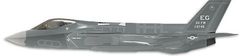
The F-35A continues to replace legacy F-16s and A-10s in some units, though the retirement of the A-10 in particular has remained controversial.
Pilot shortages have been a recurring concern, driven by competition with commercial aviation, high operational tempo, and lengthy training pipelines.
Cyber and electromagnetic spectrum operations have grown into major mission areas, blurring traditional boundaries between air, space, and information warfare.